
Space Fluid Dynamics
- Home
- Space Fluid Dynamics
Space Fluid Dynamics
Space Fluid Dynamics studies how liquids and gases behave in microgravity and reduced-gravity environments, where familiar Earth-based fluid behavior no longer applies. In space, surface tension, capillary forces, and diffusion dominate fluid motion, influencing everything from fuel management and thermal control to life-support and biological systems. Understanding these dynamics is essential for reliable spacecraft operation and long-duration missions.
At Kingjims Spacetex, Space Fluid Dynamics research supports the design of advanced materials and systems that manage fluids efficiently in space conditions. By combining physical science with innovative material engineering, this work contributes to improved stability, safety, and performance of space technologies, enabling more efficient and sustainable space exploration.
Space Fluid Dynamics also investigates multiphase flows, such as gas-liquid interactions, boiling, and condensation, under microgravity. These studies help optimize fuel delivery, thermal regulation, and fluid circulation in spacecraft systems, ensuring reliable operation even in confined or complex environments.
Furthermore, understanding fluid behavior in space aids the development of life-support systems, chemical reactors, and biological experiments that depend on precise fluid management. At Kingjims Spacetex, insights from this research are applied to create adaptive, efficient, and robust fluid-handling solutions that enhance mission safety and overall system performance for both near-Earth and deep-space exploration.

Fluid Behavior and Control in Microgravity
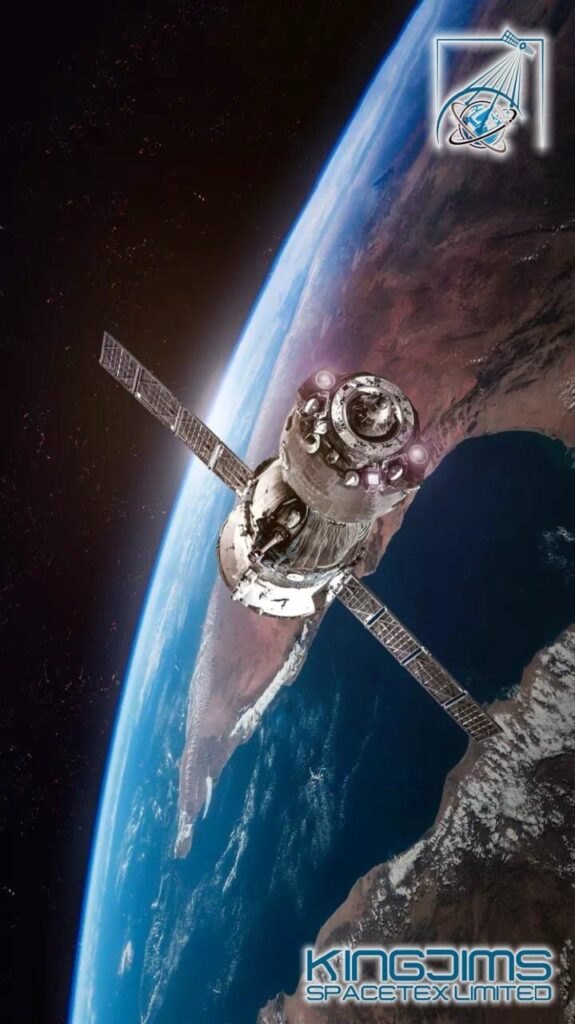
In microgravity, fluids do not settle or flow as they do on Earth, creating unique challenges for containment, transfer, and stability. Without gravity-driven convection, fluid movement is governed by surface tension, wetting properties, and pressure differences. These altered behaviors directly affect propulsion systems, thermal regulation, water management, and biological experiments in space.
At Kingjims Spacetex, this research focuses on understanding and supporting precise fluid control through advanced material surfaces and structural design. By aligning fluid dynamics research with innovative material solutions, these efforts enhance reliability, efficiency, and safety across a wide range of space-based systems and mission applications.
Space Fluid Dynamics research also explores how microgravity influences heat and mass transfer within fluids. In the absence of natural convection, thermal gradients, capillary action, and diffusion dominate, affecting cooling systems, chemical reactions, and energy transport in spacecraft. Understanding these processes is critical for designing efficient thermal-management and energy systems.
Another focus is multiphase and complex fluid behavior, including bubble formation, droplet dynamics, and the mixing of liquids with different viscosities. These studies inform the development of propulsion systems, chemical reactors, and life-support technologies that rely on precise fluid handling in challenging space conditions.
At Kingjims Spacetex, insights from fluid dynamics experiments are applied to create adaptive and resilient materials, components, and system architectures. By integrating these findings with advanced engineering solutions, the company enhances spacecraft safety, operational reliability, and long-term performance in both near-Earth and deep-space missions.