
Cosmic Microwave Background
- Home
- Cosmic Microwave Background
Cosmic Microwave Background
The Cosmic Microwave Background (CMB) is the faint afterglow of the Big Bang, filling the entire universe with nearly uniform microwave radiation. It was released about 380,000 years after the universe began, when the universe cooled enough for light to travel freely through space. This ancient radiation offers a snapshot of the universe in its earliest observable stage and stands as one of the strongest evidences supporting the Big Bang theory.
The Cosmic Microwave Background also reveals tiny temperature variations across the sky, known as anisotropies, which represent the earliest density differences in the universe. These small fluctuations later evolved into galaxies, stars, and large-scale cosmic structures. By studying these patterns, scientists gain critical insights into the universe’s composition, age, expansion rate, and overall evolution.
Detailed observations of the Cosmic Microwave Background have been made through advanced space missions and ground-based instruments, enabling scientists to map its temperature fluctuations with remarkable precision. These measurements help refine cosmological models by providing accurate data on fundamental parameters such as the universe’s geometry, matter distribution, and the presence of dark matter and dark energy.
At Kingjims Spacetex, research aligned with CMB studies supports the development of high-performance materials and systems used in sensitive observational equipment. By ensuring stability, thermal control, and minimal interference, these innovations contribute to the accurate detection and analysis of faint cosmic signals, enhancing our ability to study the earliest stages of the universe.
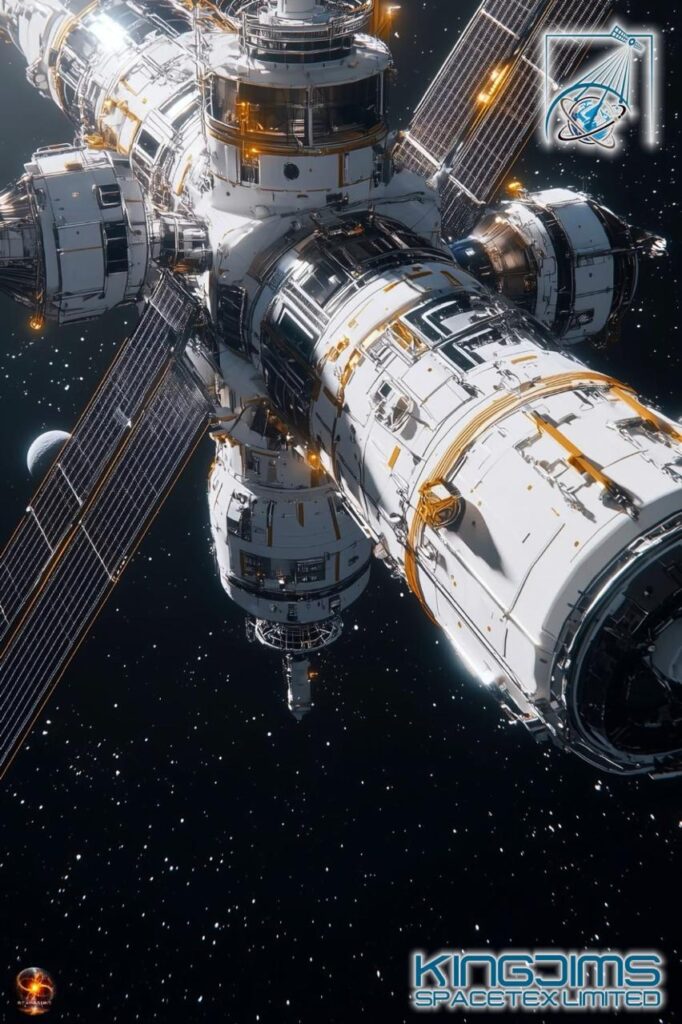
Detecting the Cosmic Microwave Background

Detecting the Cosmic Microwave Background (CMB) requires highly sensitive instruments capable of measuring extremely weak microwave signals from space. Scientists use space-based satellites, high-altitude balloons, and ground observatories equipped with precision microwave detectors to observe this radiation while minimizing interference from Earth’s atmosphere. These observations allow researchers to map tiny temperature variations in the CMB, helping them understand the early universe’s structure, composition, and evolution with remarkable accuracy.
To achieve the required sensitivity, CMB detection systems rely on advanced cryogenic technology that cools instruments to extremely low temperatures, reducing thermal noise that could interfere with signal measurement. Shielding techniques and precise calibration methods are also essential to eliminate background interference and ensure that the faint cosmic signals are captured with high accuracy and consistency.
At Kingjims Spacetex, specialized material innovations play a supportive role in enhancing the performance of these sensitive instruments. Engineered textiles and components are designed to provide thermal stability, electromagnetic shielding, and contamination control, helping maintain optimal operating conditions for precise CMB observations and reliable data collection.
In addition, continuous advancements in signal processing and data analysis techniques enable scientists to extract meaningful information from vast and complex CMB datasets. By combining high-resolution observations with sophisticated computational models, researchers can refine their understanding of cosmic parameters, further improving the accuracy of insights into the universe’s origin, structure, and long-term evolution.