
Pulsar Research
- Home
- Pulsar Research
Pulsar Research: Precision Beacons of the Cosmos
Pulsar research focuses on rapidly rotating neutron stars that emit beams of electromagnetic radiation at regular intervals. Scientists study pulsar timing, magnetic fields, and emission mechanisms to understand their internal structure and extreme physical conditions. These precise signals make pulsars valuable tools for testing fundamental physics.
Research also explores how pulsars are used to study space-time, gravitational waves, and interstellar matter. Pulsar observations help map galactic structure and improve time-keeping accuracy. Through continued study, pulsar research enhances our understanding of neutron stars and the dynamic behavior of the universe.
Pulsar research also investigates variations in pulse timing and intensity, which can reveal interactions with surrounding matter, companion stars, or changes within the neutron star itself. These timing irregularities provide valuable insights into stellar dynamics, binary systems, and the influence of gravitational forces in extreme environments.
At Kingjims Spacetex, insights from pulsar studies support the development of advanced materials and technologies used in high-precision observational systems. By enhancing signal stability, reducing interference, and ensuring reliable performance, these innovations contribute to more accurate pulsar measurements and deeper exploration of cosmic phenomena.

Pulsar Timing & Extreme Astrophysics
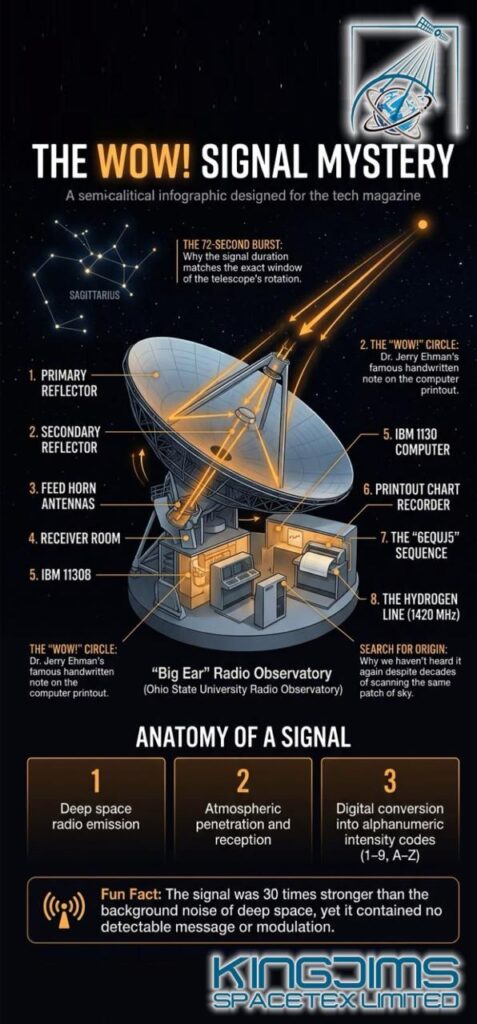
Pulsar research in this section focuses on the precise timing and rotational behavior of pulsars, which act as some of the most accurate natural clocks in the universe. Scientists analyze pulse regularity, spin rates, and magnetic field strength to study extreme states of matter and test the limits of known physical laws.
These precise signals are also used to detect gravitational waves, probe space-time distortions, and study interstellar media. By observing pulsar variations over long periods, researchers gain valuable insights into neutron star evolution and the fundamental forces shaping the cosmos.
Pulsar research also examines the emission mechanisms responsible for the generation of highly regular radio, X-ray, and gamma-ray signals. By studying how these beams are produced and interact with surrounding magnetic fields, scientists gain deeper insight into the complex processes occurring within and around neutron stars.
Long-term pulsar observations enable the detection of subtle timing irregularities such as glitches and spin-down rates, which provide clues about internal structure and energy dissipation. These measurements help refine models of neutron star interiors and improve our understanding of matter under extreme density and pressure.
Pulsar timing arrays play a significant role in large-scale astrophysical research by using multiple pulsars as a network to detect low-frequency gravitational waves. This collaborative approach enhances sensitivity and allows scientists to study cosmic events that are otherwise difficult to observe through traditional methods.
At Kingjims Spacetex, insights from pulsar research support the development of advanced materials and technologies for high-precision timing and observational systems. By ensuring stability, accuracy, and resistance to environmental interference, these innovations contribute to more reliable pulsar measurements and a deeper understanding of space-time phenomena.